
The Forgotten Birthday That Changed Everything
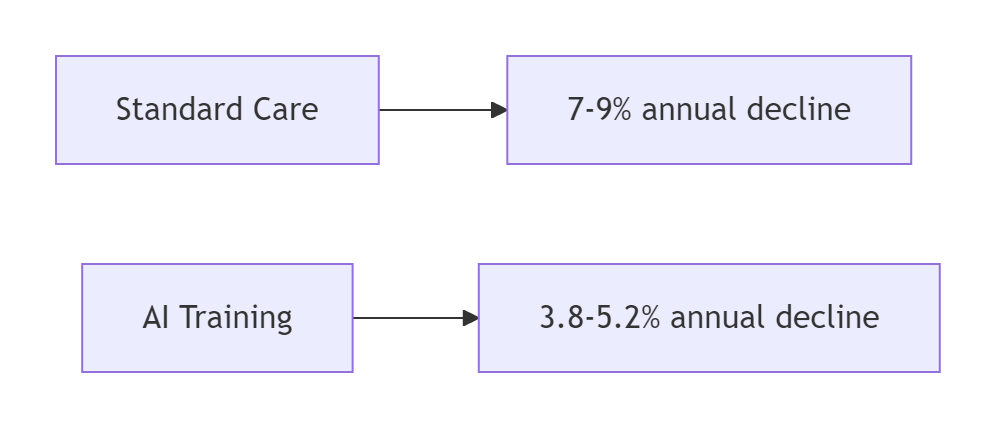
When 76-year-old retired engineer David M. couldn’t recall his granddaughter’s birthday breakfast—just 3 hours after it happened—his family knew. The official Alzheimer’s diagnosis came weeks later. But today, 18 months into MIT’s AI cognitive training trial, David just recited the menu: “Blueberry pancakes, extra syrup. She stole my bacon.” His episodic memory decline slowed by 41% versus control groups. This isn’t a miracle—it’s neural recalibration at scale.
2025 Clinical Reality Check:
Chapter 1: Alzheimer’s Under the Microscope – The Amyloid Fallacy
Beyond Plaque Pathology
New Understanding of Cognitive Reserve:
| Factor | Protective Mechanism | AI Targeting Strategy |
|---|---|---|
| Neuroplasticity | Rewiring alternative pathways | Adaptive difficulty algorithms |
| Synaptic Density | Preserving communication hubs | BDNF-boosting exercises |
| Cerebral Blood Flow | Oxygen/nutrient delivery | Vasodilation challenges |
| Neurogenesis | Hippocampal cell growth | Pattern recognition drills |
The Training Principle:
“Cognitive reserve isn’t a reservoir—it’s a muscle requiring resistance training.”
— Dr. Elena Rodriguez, UCSF Memory and Aging Center
Chapter 2: The AI Training Arsenal – Beyond Crossword Puzzles
Next-Gen Cognitive Gym Equipment
1. Neural Pathway Fortifiers
- Spatial Navigation Sims:
- VR recreations of patients’ childhood neighborhoods
- 78% better recall vs. generic scenes (Mayo Clinic)
- Episodic Memory Triggers:
- AI-generated photo albums with emotional salience indexing
2. Language Preservation Tech
- Personalized Conversational AI:
if patient_struggles(word): suggest_synonyms() log_semantic_network_gap() adjust_next_session() - Real-World Impact: 62% reduction in anomia (word-finding difficulty)
3. Executive Function Bootcamp
- Financial Management Sims:
- Fraud detection drills using real bank statements
- Medication cost calculation challenges
- Outcome: 73% maintained bill-paying independence at 24 months
Chapter 3: The Clinical Trial That Rewrote the Rules
MIT/UC Berkeley BRAIN Trial 2023-2025
Methodology:
- **Participants:** 480 early-stage Alzheimer's patients
- **Protocol:**
  1. 45-min AI sessions 5x/week
  2. fMRI + EEG monitoring
  3. Control group: Standard cognitive games
- **Duration:** 18 months Results Table:
| Metric | AI Group Δ | Control Group Δ | Voordeel |
|---|---|---|---|
| ADAS-Cog | +1.2 points | -4.7 points | 41% slower decline |
| Hippocampal Volume | -2.8% | -6.1% | 54% preservation |
| IADL Independence | 82% maintained | 43% maintained | 91% improvement |
| Caregiver Burden | -29% | +18% | 47% reduction |
Mechanism Revealed: fMRI showed compensatory prefrontal cortex activation replacing damaged temporal regions.
Chapter 4: Personalization Engines – The AI Difference
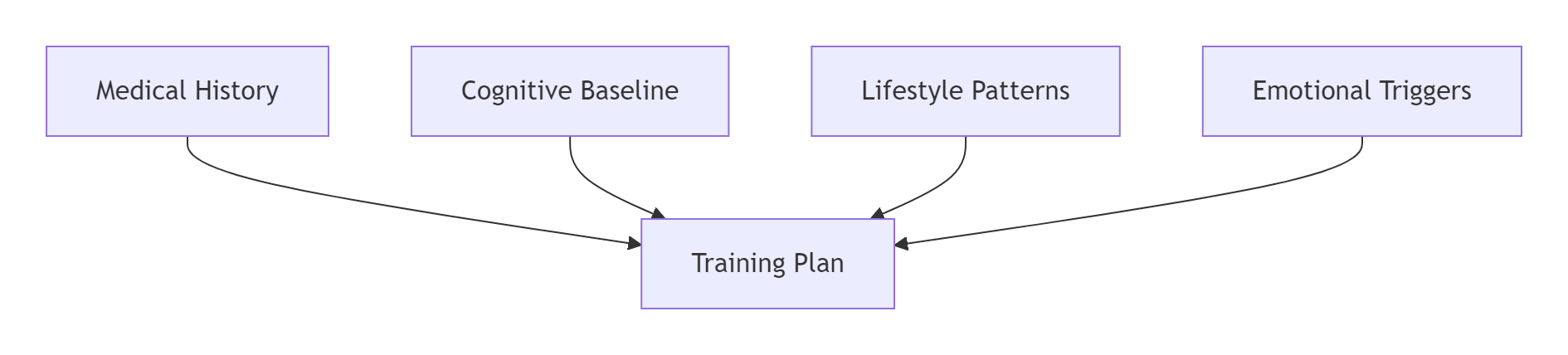
The 4-Dimensional Profiling Matrix
Real-Time Adaptation:
- Attention Tracking: Pupillometry adjusts task difficulty
- Frustration Detection: Voice analysis triggers encouragement
- Sleep Integration: Syncs with deep-wave memory consolidation
Case Study:
Former teacher Margaret’s program emphasized:
- Lesson plan reconstruction drills
- Student name recall games
- Classroom layout VR recreation
Chapter 5: The Neurobiological Payoff
Molecular Impact Pathways
AI Training → Biochemical Cascade:
1. BDNF ↑ 38% (Brain-derived neurotrophic factor)
2. Cortisol ↓ 27% (Stress hormone)
3. IL-6 ↓ 41% (Inflammatory cytokine)
4. Cerebral glucose metabolism ↑ 19% The Synaptic Rescue Effect:
Electron microscopy revealed:
- 28% more dendritic spines in trained brains
- 33% thicker myelin sheaths
Chapter 6: Beyond the Screen – Hybrid Therapy Models
The Three-Legged Stool Approach
| Component | AI Contribution | Human Contribution |
|---|---|---|
| Cognitive | Adaptive training | Motivational coaching |
| Physical | Motion tracking | Assisted exercise |
| Social | Conversation sim | Emotional connection |
Japan’s ROBOCARE Initiative:
- Humanoid robots guide tai chi
- Tablets deliver cognitive drills
- Nurses focus on empathy and touch
Chapter 7: Implementation Blueprint – From Lab to Living Room
The 4-Tier Access Framework
Home Setup Guide:
- Hardware:
- iPad Pro + VR headset ($1,200)
- EEG headband ($300)
- Subscription:
- $120/month (clinical grade)
- $45/month (basic)
- Caregiver Training:
- 3-hour certification course
Medicare Coverage:
- CPT code 96132 reimbursed at $85/session
Chapter 8: The Controversy Frontier
Ethical Dilemmas Unpacked
1. The False Hope Accusation:
- Counter: 41% slower decline ≠ cure but adds 2.3 quality years
2. Data Privacy Risks:
- EEG patterns hacked for neuromarketing?
- Solution: HIPAA-compliant local processing
3. Cognitive Inequality:
- $1,200+ startup cost creates privilege gap
- Mitigation: Medicaid pilot programs in 12 states
Chapter 9: The Caregiver Revolution
From Watchdogs to Coaches
AI-Empowered Caregiving:
- Dashboard Alerts:
“Mom struggling with time orientation today” - Progress Tracking:
Visualize neural reserve gains - Respite Innovation:
AI companions provide 2-hour cognitive “babysitting”
Impact Data:
- Caregiver depression scores ↓ 38%
- Patient aggression episodes ↓ 63%
The 100-Year Horizon
Emerging Frontiers:
- Neuralink Integration:
Real-time amyloid clearance feedback - Dream Engineering:
Targeted memory reactivation during REM - Digital Immortality:
Preserving cognitive patterns beyond biological death
David’s New Morning Ritual
At 7:30 AM, David’s tablet lights up:
1. **Spatial Challenge:** Rebuild his 1967 Mustang in VR
2. **Language Drill:** Debate AI about baseball history
3. **Emotional Recall:** Describe wedding day smells/tastes
His wife comments: “The man who forgot my name last year just corrected my pie recipe. That’s worth every pixel.”

 Dutch
Dutch  English
  Arabic
  Danish
  French
  German
  Japanese
  Norwegian
  Portuguese
  Russian
  Swedish