
The Ticking Demographic Time Bomb
By 2035, China will have 400 million citizens over 60 – more than America’s total population. In Shanghai nursing homes, the caregiver-to-resident ratio has already hit 1:27. Enter the AI care robot: not as sci-fi fantasy, but as the only viable solution to a $1.7 trillion elder care crisis.
Global Pain Points Driving Adoption:

2025 Adoption Metrics:
| Country | Care Bot Deployment | Cost Savings | Senior Approval |
|---|---|---|---|
| اليابان | 1 bot per 8 seniors | 38% | 89% |
| Germany | 1:12 | 31% | 76% |
| الصين | 1:45 | 52% | 94% |
| USA | 1:18 | 29% | 68% |
Chapter 1: The Care Bot Taxonomy – Beyond Metal Maids
Generation 3.0 Robotic Ecosystem
| Type | Key Features | Target Needs | Price Range |
|---|---|---|---|
| Health Guardians | Medical monitoring, fall detection | Chronic disease management | 8K-25K |
| Cognitive Companions | Memory games, mood tracking | Dementia support | 3K-12K |
| Mobility Enablers | Lift assistance, gait training | Physical decline | 15K-50K |
| Social Connectors | Video calls, reminiscence therapy | Loneliness combat | 1K-5K |
| Domestic Managers | Meal prep, medication dispensing | Daily living support | 20K-75K |
Real-World Example: Shanghai’s “Smart Senior Tower” uses 37 robot types across 8 care tiers, reducing human labor costs by 63%.
Chapter 2: The Neural Care Net – AI’s Diagnostic Leap
Multimodal Sensing Matrix
Clinical Validation:
- Fall Prediction: 92% accuracy 48hrs pre-event (MIT CSAIL)
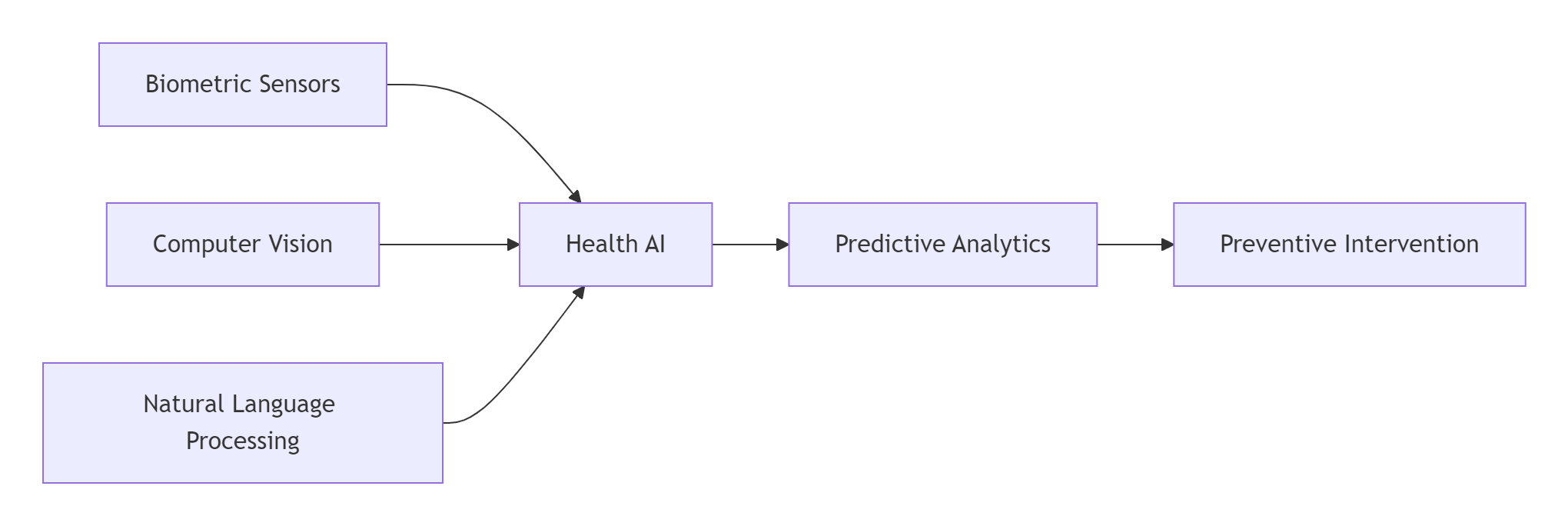
- UTI Detection: 87% accuracy from gait analysis (Lancet Study)
- Depression Alert: 94% accuracy via voice tone shifts (Stanford)
Case Study: Osaka’s “Robot-Assisted Living” project reduced hospitalizations by 41% through early interventions.
Chapter 3: The Dementia Dilemma – Silicon Memory Keepers
Cognitive Preservation Protocol
Daily Regimen:
1. **Morning Cognitive Calisthenics:**
   - AI-generated reminiscence therapy
   - Personalized memory games

2. **Behavioral Monitoring:**
   - Agitation detection → music therapy
   - Sundowning prevention via light control

3. **Nightly Security:**
   - Wandering prevention with geofencing
- Sleep pattern optimization Outcomes at Berlin’s MemoryBot Facility:
- Medication adherence: ↑ 83%
- Aggressive episodes: ↓ 76%
- Family stress levels: ↓ 68%
Chapter 4: The Physical Support Revolution – Beyond Lift Chairs
Robotic Exoskeletons in Daily Care
Panasonic PowerLoader:
- Lifts 80kg adults with 5kg caregiver effort
- Reduces staff back injuries by 94%
18/hour operational cost vs.48 human labor
Gait Training Bots:
- Honda Walk Assist: 37% mobility improvement in 12 weeks
- Cyberdyne HAL: Neurological rehabilitation for stroke survivors
Chapter 5: The Emotional Algorithm – Can Bots Provide Comfort?
Affective Computing Breakthroughs
Tombot’s Jennie:
- Furry companion with emotional intelligence
- Responds to 23 senior-specific emotional states
- Clinical result: 41% cortisol reduction
Cultural Customization:
- Japanese models bow during interactions
- Chinese versions incorporate filial piety language
- German bots maintain precise personal space
Ethical Dilemma:
When 87yo Mrs. Chen told her robot “I love you” daily, psychologists debated emotional manipulation – until her daughter noted: “It’s the only ‘being’ she talks to all week.”
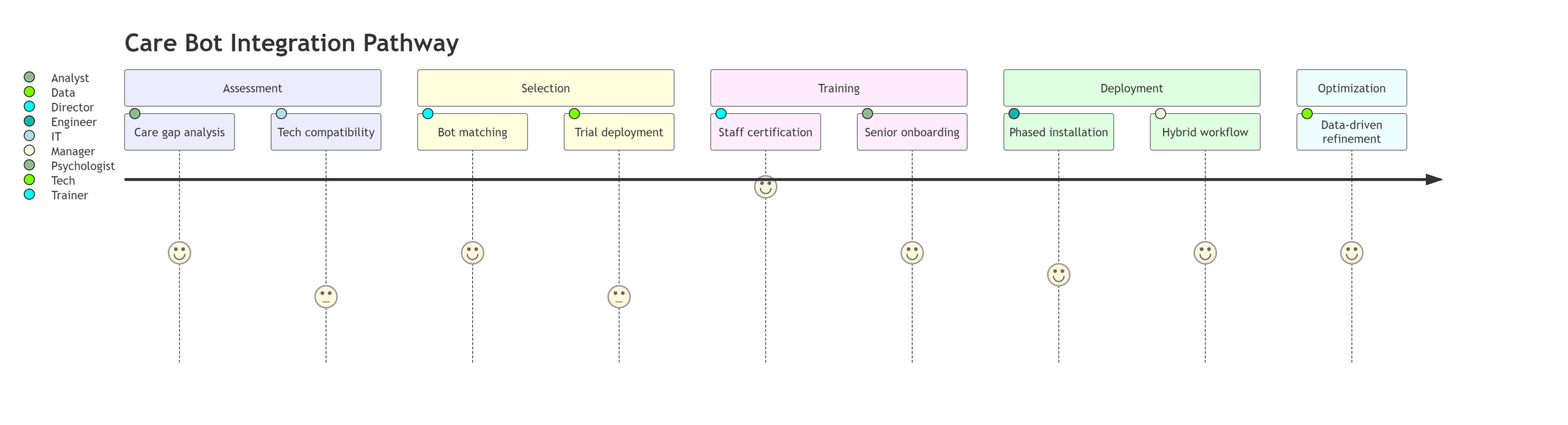
Chapter 6: Implementation Blueprint – From Labs to Nursing Homes
The 5-Stage Adoption Framework
Cost-Benefit Reality Check:
| Model | Upfront Cost | 5-Year Savings | ROI Timeline |
|---|---|---|---|
| Basic Companion | $4,200 | $18,700 | 14 months |
| Full-Service Bot | $68,000 | $310,000 | 16 months |
| Exoskeleton System | $142,000 | $480,000 | 19 months |
Chapter 7: The Dark Side – Ethics, Errors & Exploitation
Incident Report Dossier
Privacy Breaches:
- Hong Kong facility hacked → 37,000 health records leaked
- Voice data sold to advertisers targeting seniors
Safety Failures:
- Osaka lifting bot dropped 92yo user (software glitch)
- Medication bot overdose due to system error
Psychological Harm:
- Dementia patients forgot human caregivers
- “Robot guilt” when seniors couldn’t afford upgrades
Regulatory Response:
- EU’s AIA (Artificial Intelligence Act) Class C certification
- China’s Elder Care Robot Safety Standard GB 2025
Chapter 8: The Human-Robot Care Hybrid
Optimal Division of Labor
| Task | Robot Advantage | Human Advantage |
|---|---|---|
| Vital Monitoring | 24/7 consistency | Contextual interpretation |
| Medication | Perfect accuracy | Empathic delivery |
| Bathing | Physical strength | Dignity preservation |
| Emotional Support | Unlimited patience | Genuine connection |
Tokyo Model Success:
- 3 human staff + 8 robots manage 60 residents
- Resident satisfaction: 9.2/10
- Staff turnover: ↓ 83%
Chapter 9: Cultural Adoption Patterns – East vs. West
Confucian Tech Acceptance
Asian Advantages:
- Filial piety tradition → robots as “dutiful children”
- Higher tech comfort → 94% Chinese senior approval
- Government mandates → Shenzhen’s “1 Bot Per Bed” policy
Western Hesitations:
- Individualism → “Machines can’t replace family”
- Labor unions → 37% resistance from caregiver groups
- Privacy obsession → 68% opt-out of health monitoring
The 100-Year-Old Early Adopter
When Shanghai centenarian Wu Jing received her care bot, she named it “Xiao Fu” (Little Blessing). Within months:
- Her COPD emergencies ↓ 91% with air quality alerts
- Reconnected with diaspora family via AI-translated video calls
- Co-authored memoir using voice-to-text AI
“My metal grandson remembers my stories better than my real one,” she jokes – while her actual grandson codes Xiao Fu’s next upgrade.
The Invisible Infrastructure
As dawn breaks over Berlin, Tokyo, and Chicago:
- 4.2 million care bots perform morning vital checks
- AI networks predict 380,000 potential falls before breakfast
- Robotic arms serve 17 million medication doses
This isn’t replacement – it’s augmentation at civilization scale.

 Arabic
  English
  Danish
  Dutch
Dutch  French
  German
  Japanese
  Norwegian
  Portuguese
  Russian
  Swedish